Hi.
Welcome to our family farmstead. Hope you have a nice stay!
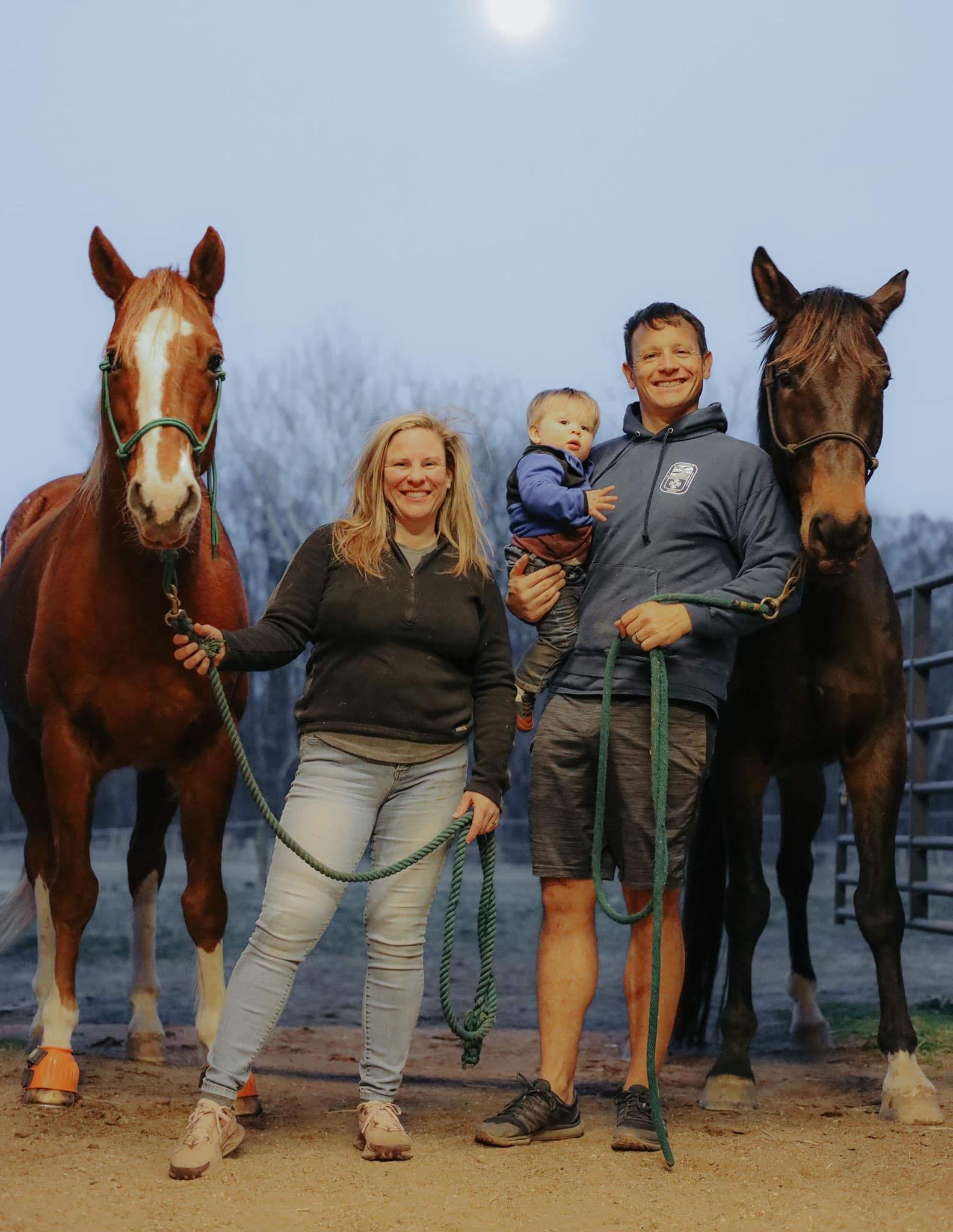
Welcome to our family farmstead. Hope you have a nice stay!

Did you know that regenerative farming can actually sequester carbon out of the air and into the ground? This is why I now say we are “grass farmers.” Yes, we raise horses, chickens, turkeys, ducks, and pigs. But the cornerstone to doing all of that while also helping the environment is… grass.
Grass absorbs carbon dioxide the same way trees do, but on a smaller scale. Through photosynthesis, each plant takes carbon from the atmosphere and uses it to build more plant matter. However, unlike forests, grasslands sequester most of their carbon underground, while forests store it mostly in woody biomass and leaves. If wildfires cause trees to go up in flames, the burned carbon they formerly stored is released back to the atmosphere. When fire burns grasslands, however, the carbon stored underground tends to stay in the roots and soil, making them more adaptive to climate change.
Animals rotated through pasture are able to fully express their true nature. Chickens can be the omnivores they truly are, and in doing so, they help rid the farm of bugs, pests - and of high importance on a horse farm - fly larvae and flies. This eliminates the need for pesticides and significantly reduces the need to use chemical fly sprays and de-wormers on the horses themselves. Our pigs rotate through our woods clearing out the underbrush, allowing sunshine in, and disturbing dormant seed beds with their rooting, thereby assisting us with building new growing and grazing areas.
As the animals rotate through our fields, they leave behind manure, which fertilizes our soil and eliminates the need for chemical fertilizer. Having a diet rich in insects improves the immune system of chickens, keeping them healthy while also reducing feed consumption. The exercise from grazing greatly improves meat quality in both poultry and pork. By rotating and grazing a variety of animals on one pasture, each animal eats different plants and grasses, thereby eliminating the need for herbicide use. Our pollinators thrive. The animals we consume have not themselves consumed chemicals. We feed them locally-sourced, non-GMO supplemental grains, reducing the carbon footprint from hauling mono-cropped grains in from around the country. We process our chickens ourselves humanely on-farm.
Imagine if we all supported this form of food production with our grocery dollar! How much healthier would we be? How greatly would our morals as a society improve in our treatment of animals? We could feel good about the world we are leaving our children, and we could be here - healthier - longer with them to enjoy it.